

The key is smaller than Arina Jet remembers. She finds it in the inner pocket of her black suitcase, beneath a folded luggage tag she no longer uses. At the terminal window, she turns the brass between her fingers. Beyond the glass, an aircraft stands under evening lights. Her own journey has ended here, in the town she used to call home. She had planned to go straight to a hotel. The key makes that plan feel suddenly incomplete.
She has carried it for years without needing it. On each trip, it remained in the same pocket, too familiar to throw away and too easy to overlook. It belongs to the blue front door of her childhood house, a property now hers and largely unused. She has returned to the town before, but always for a short visit with a schedule attached. There was never an evening she had deliberately kept for opening that door.
Arina looks at the time. There is no appointment left tonight. Her ivory jacket is still neatly fastened, its two rows of gold buttons catching the terminal light. The matching hat sits above her dark hair, gathered back into a low bun. She puts the key in a pocket she can reach, takes the handle of her suitcase and changes her destination. She can decide where to sleep after she has seen the house.
The Blue Door
The street is wet when she arrives. Light from a porch lamp touches the uneven stones, and the blue door looks darker than it did in her memory. A clay pot rests on the low ledge beside it, with lavender growing untidily over one side. Arina stops with her case close to her leg. She recognizes the small dent beneath the door handle. Years ago, her suitcase had struck it on the morning she first left town.
She fits the key into the lock. For a moment, it resists. She adjusts her hand, turns again and feels the mechanism move. The sound is plain and familiar: a latch releasing, a door brushing lightly against the floor. Arina steps inside and reaches for the switch near the frame. A lamp comes on in the hall. Nothing appears to have been waiting for a dramatic entrance. The house simply becomes visible around her.
There is the yellow chair by the stairs, its fabric faded at the arms. There is the shallow bowl where keys used to collect, and the narrow shelf with a line of books she once arranged by height. Arina wheels her case beyond the doorway and closes the door. The silence inside is different from the terminal's quiet. It has no announcement about to interrupt it. She can hear herself setting the brass key in the bowl.
She had expected to feel embarrassed by how little she had returned. Instead, her first impulse is practical. She straightens the small rug, opens a curtain and checks the rooms she will use. The house has been kept in basic order during its empty periods, but it carries the stillness of a place seldom occupied. Arina pulls a chair away from the desk in her old room. Its legs leave faint tracks in the dust.

A Letter to Her Future Self
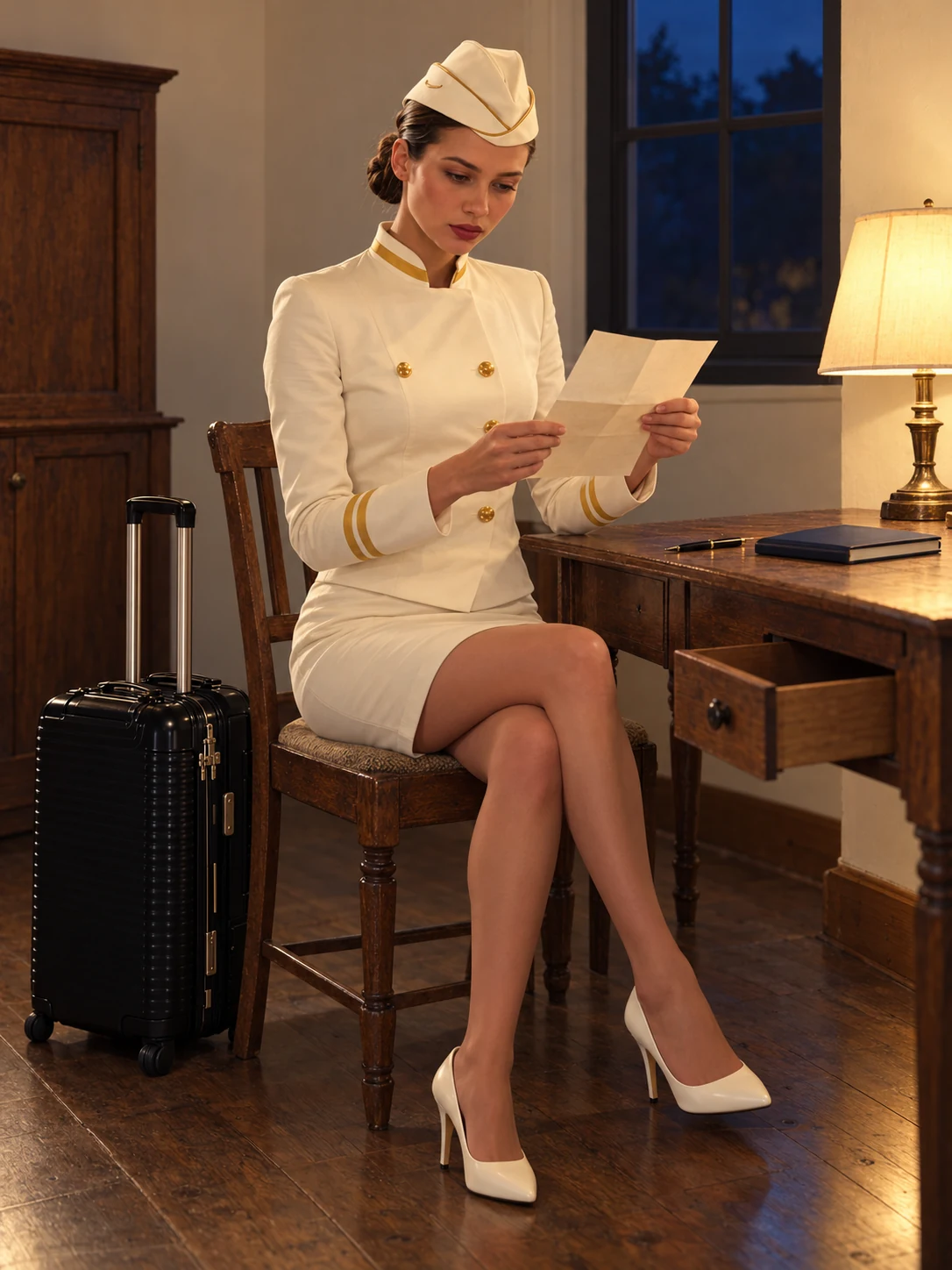
The desk stands where it always stood, beside the window. A warm lamp illuminates the worn edge where she used to rest her wrist. She opens the small drawer, expecting spare paper. A folded cream envelope lies beneath a notebook. On its front, in large uneven handwriting, are the words: For me, when I finally know what I'm doing. Arina recognizes the handwriting at once. She wrote it at fifteen.
She sits down before opening the envelope. Her black case rests beside the chair, looking oddly formal in the room where she once kept schoolbooks under the bed. The paper inside has been folded into thirds. She smooths it gently and begins to read. The first lines are cheerful and certain. Her younger self assumed that growing up would include knowing where to live, what to do and how to make a difficult choice without hesitation.
The letter has a list of promises. Travel somewhere she cannot yet picture. Learn to live on her own. Keep the yellow chair, because it is the best place to read when it rains. Return to this room and write an answer. Arina smiles at the chair appearing among such grand ambitions. She had forgotten that part. Beneath the list is a question, underlined twice: Are you happy, or are you just good at being busy?
Arina lowers the paper. Outside, rain gathers along the window's lower edge. She can answer some of the letter easily. She has traveled, learned to manage a home and made decisions her younger self would not have understood. Happiness is harder to summarize. There have been good days she enjoyed and difficult ones she got through. She has also become practiced at filling a calendar before asking whether she wants everything written in it.
The question feels less like an accusation when she reads it again. At fifteen, she was curious about the person she would become. She did not know which promises would prove simple and which would need another shape. Arina turns the page and finds a final sentence on the back: If you haven't figured everything out, you can still write to me. The line is smaller than the rest, as though added after the letter was already finished.
An Answer Without a Perfect Ending
She opens the notebook and takes a pen from her bag. For several minutes, she writes a reply with the old letter beside her. She tells her younger self about learning to find her way through unfamiliar places, about making a meal in an apartment that finally felt like her own, and about days when she wished someone could tell her which choice was right. She leaves out the polished version she might have told a stranger.
Then she answers the question. Sometimes I am happy. Sometimes I am tired. I have often mistaken being busy for knowing where I'm going. The words look simpler on paper than they sounded in her head. She does not cross them out. Below them, she writes what brought her here tonight: I couldn't make every promise exactly as you imagined it. But I kept the key, and I came back to write the answer.
Arina reads both letters together. The younger voice has given the older one permission to be unfinished. She folds her reply once and places it with the original in the envelope. Before returning it to the drawer, she adds a date beneath the old handwriting. The drawer closes with a gentle click. This time, leaving something behind feels deliberate. There will be a reason to open it again, beyond searching for spare paper.
She decides to stay at the house that night. The decision is small enough to make immediately. She puts her things in the room, hangs her uniform carefully and leaves the key in the hall bowl. Later, in the yellow chair with the rain still at the window, she chooses a book from the shelf. She does not need to read very far. Sitting there is already an answer to one of the promises in the letter.
A Reason to Return
In the morning, Arina puts on the ivory uniform again and brings her suitcase to the door. Daylight has softened the blue paint. Before setting off, she notices that the lavender pot is turned away from the sun. She straightens it on the low ledge and turns its greener side toward the morning light. It is a modest thing to do for a house she has often treated as somewhere she would deal with later.
She has no grand renovation plan and no sudden certainty about the years ahead. She knows something more useful: she wants to return while a visit can still be ordinary. Next time, she will bring a few things the house needs and leave herself enough time to use the rooms. The envelope can stay in the drawer. Her answer does not have to be complete before she is allowed to come back.

Arina locks the blue door and checks it once. The brass key returns to a reachable pocket instead of the forgotten lining of her case. She takes the suitcase handle and walks along the drying stones. The house behind her holds two letters now, written by the same person years apart. For the first time in a long while, returning has become something she can choose. She has opened the door, and she knows where the key belongs.
An original fictional story featuring Arina Jet. The AI-created illustrations use the supplied character reference; the house, letters and events are imagined.