

In her red uniform, black sunglasses and white gloves, Arina Jet looks ready for the next departure. But the day has finished. She is walking along a quiet waterfront with her suitcase beside her, taking the slightly longer route home because the light is still on the water. Nothing unusual happens on the way. She slows down enough to see the trees reflected between the buildings, then carries on.
At home, the apartment is much as she left it: a glass beside the sink, a jacket over the back of a chair, a small wooden table with yesterday's papers on it. There is no carefully staged room waiting behind the door. There is a place she uses, and an evening she would like to enjoy using it. She leaves her keys in their usual dish and takes off her gloves.
This evening follows four small choices: clothes that feel comfortable, one surface made welcoming, a supper she can prepare without much fuss and time to sit down afterwards. Together, they give the hours after work a shape. Arina does not need a new apartment, a different wardrobe or a perfectly organized week to begin. She starts with what is already within reach.
A Change of Clothes
She hangs up her uniform before choosing an ivory linen shirt and dark, straight trousers. The shirt is soft from washing; its sleeves stay rolled comfortably above her wrists. She keeps her hair in its low ponytail, removes her sunglasses and leaves them beside her bag. Changing clothes is a practical transition. She no longer has to keep the jacket smooth while she moves around the kitchen.
Arina likes the way a simple outfit can work through several parts of an evening. The same shirt is suitable for arranging flowers, preparing food with an apron over it and sitting on the sofa later. She does not change three times to make each moment look different. The clothes feel like hers precisely because she can do ordinary things in them.
A useful place to begin with everyday style is the outfit you already reach for without hesitation. Notice the comfortable sleeves, the shoes you can walk in and the fabrics you enjoy wearing. In Arina's imagined routine, familiar clothes make it easy to move between cooking, eating and sitting down. She knows how they fit and enjoys wearing them.
Three Stems and a Clear Table
She moves the papers off the wooden table, sorting the important ones into a folder and setting the rest aside for recycling. It takes a few minutes. She stops when there is room for a plate, a glass and a vase. The cupboard nearby is still untidy, but opening every drawer would turn a small preparation for supper into a much larger project.
Three cream-colored flowers wait beside the vase. Arina trims the stems, adds clean water and adjusts them until they sit at different heights. One leans a little toward the window. She leaves it that way. Against the wood, the pale petals bring a quiet change to a familiar corner of the room. The table is still an ordinary table; now she wants to sit at it.
If you want to borrow this idea, choose a surface you actually use. Make room for the activity it serves. A flower already in a vase, a small plant or an object you like can be enough. The useful part is having a clear place to eat, read or put down your cup, with something you enjoy seeing beside it.
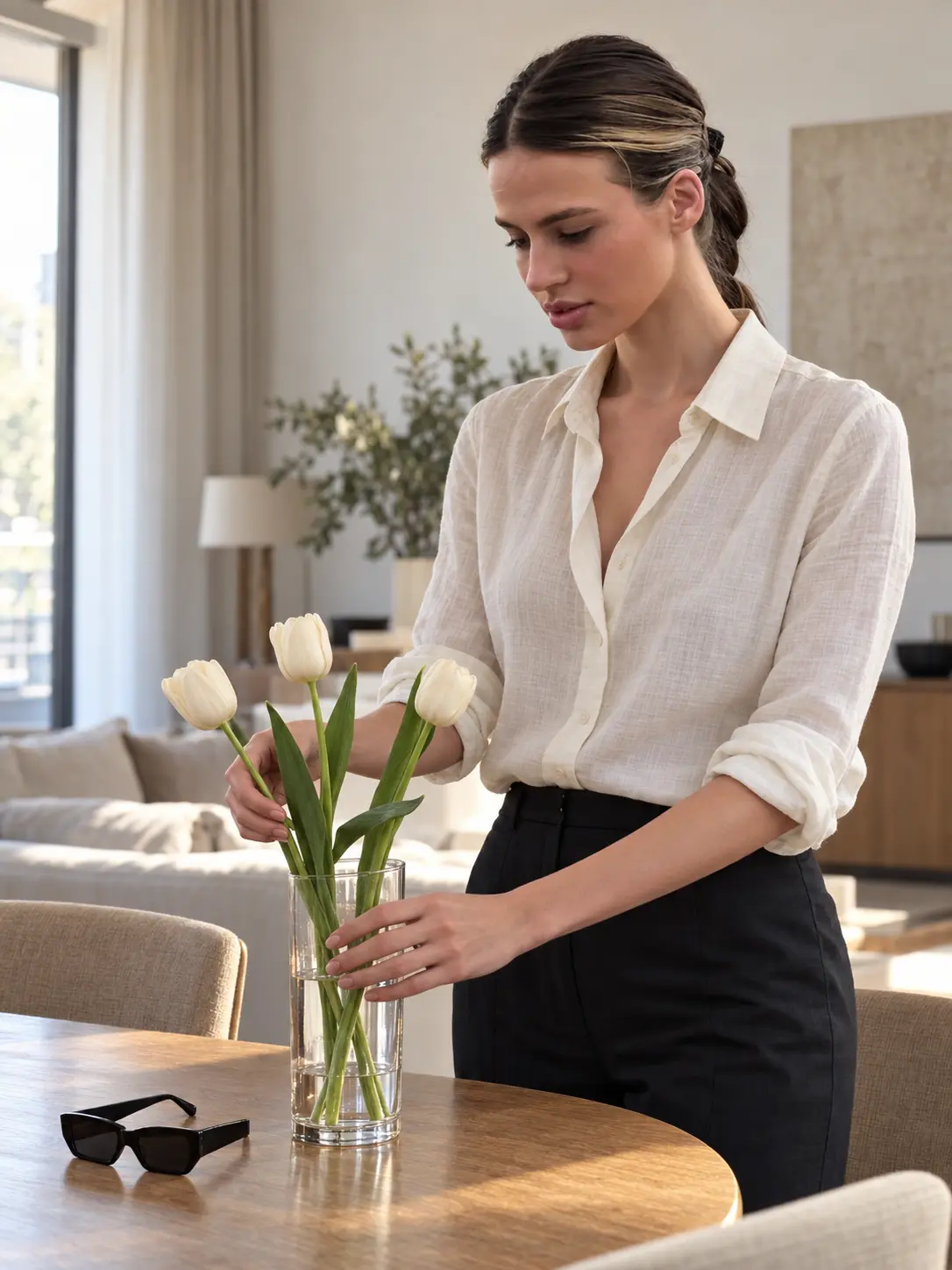
Before going into the kitchen, Arina opens the window briefly. The late light falls across the flowers and the empty place she has made for her plate. She notices how differently the room feels when the first thing she sees is somewhere to sit. Later, when the food is ready, she can bring it straight to this corner and enjoy it.
A Supper Worth Sitting Down For
For supper, she chooses pasta with tomatoes. She has what she needs, and she knows the meal well enough not to keep checking a recipe. A plain green apron goes over the linen shirt. While the pasta cooks in a pot, she stirs the tomatoes in a pan, tasting the sauce and adjusting it before bringing the two together.
She puts a plate beside the stove, sets out a glass and clears the small section of worktop she will need. These are modest decisions, but they save her from carrying a hot pan around things left in its way. The kitchen is compact. It works best for her when the next step has a place to happen.
Arina makes enough for the meal she wants, then rinses a few utensils while the food finishes cooking. She does not attempt a second dish because the first looks too simple. When the pasta is ready, she takes off the apron and carries her plate to the table. The flowers have shifted slightly in the vase. She turns it so the leaning stem no longer reaches across the space for her glass.
Arina sits down for dinner and gives herself time to enjoy it. The plate is warm, the tomatoes soft and the linen sleeves still rolled out of the way. She eats at her own pace. Afterwards, she washes what she used and wipes the worktop, leaving a clear place for breakfast the following morning.

An Evening Without a Performance
As the light fades, she switches on the floor lamp near the sofa. The warmer light makes a smaller part of the apartment feel like the place to spend the evening. Arina carries a ceramic cup over, settles against the cushion and lets her feet rest. The vase is on the nearby table now, where she can see it without turning her head.
Her phone stays within reach, but it does not have to occupy her hands. Sometimes she listens to music. Sometimes she looks out at the windows across the street. Tonight, she is content to sit for a while, noticing the familiar texture of the cup and the quiet sounds from the room. There is no photograph she needs to take before the moment counts.
An evening at home can include unfinished things. The folder of papers is still waiting; tomorrow's laundry has not disappeared. Arina decides what can wait until the following day and lets it wait. This is a preference for this evening, not a rule she expects every evening to obey. On another night she may need to get more done. Tonight, she has time to enjoy the place she comes home to.

Make the Next Day Easier
Before bed, she puts her keys back in the dish, checks the next day's departure time and gathers what she will need in her bag. She chooses her clothes and leaves them where she can find them. The preparation is brief. She has learned that a few things in the right place can make the next morning easier without requiring her to organize the whole week at once.
The apartment still contains signs of daily life: a cushion moved out of position, her sunglasses beside the bag, a shirt ready to be worn again. Arina prefers it that way. She can recognize herself in what she uses and in where she leaves it. The flowers are a small addition, not an attempt to turn the room into a place nobody lives in.
By the time she switches off the lamp, the evening has included a walk, a change of clothes, a meal and a quiet hour at home. Nothing happened that required a special occasion. That is what she likes about it. An ordinary evening gave her several things worth enjoying, and she made enough room to notice them.
An original illustrated lifestyle story featuring the fictional character Arina Jet. The AI-created images use a supplied visual reference; the apartment and routine are imagined, not a record of the reference subject's private life or an airline endorsement.